Table of Contents
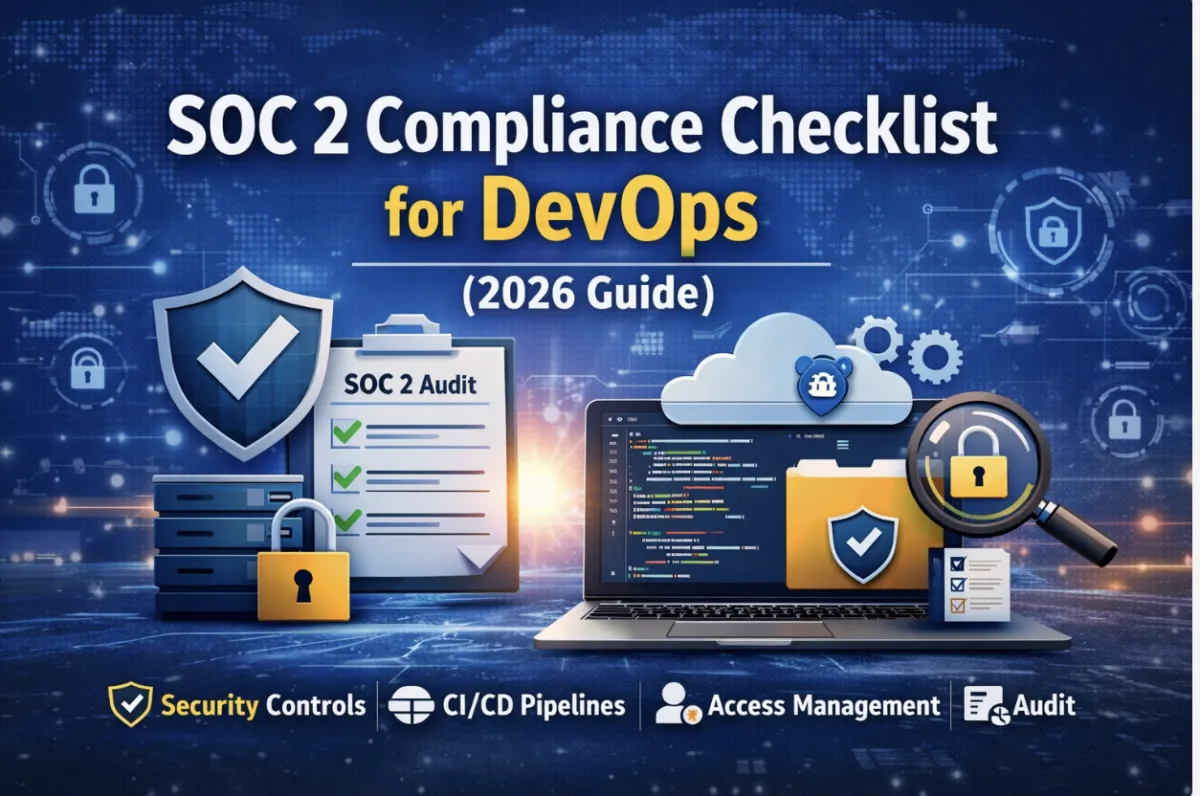
SOC 2 Compliance Checklist for DevOps (2026 Guide)
If you're building SaaS or handling customer data, SOC 2 compliance is no longer optional — it's a requirement for closing enterprise deals. This guide breaks down a practical SOC 2 checklist for DevOps engineers so you can build audit-ready infrastructure from day one.
What is SOC 2 Compliance?
SOC 2 (System and Organization Controls) is a framework that ensures your systems are secure, available, process data with integrity, maintain confidentiality, and protect privacy. For DevOps, this means your infrastructure, pipelines, and access controls must be auditable and secure.
SOC 2 DevOps Checklist (2026)
1. Identity & Access Management (IAM)
- Enforce least privilege access.
- Enable Multi-Factor Authentication (MFA) for all users.
- Use Role-Based Access Control (RBAC).
- Rotate credentials and API keys regularly.
- Centralize identity (Keycloak, Okta, AWS IAM, etc.).
2. Infrastructure as Code (IaC)
- Use Terraform/CloudFormation.
- Store IaC in Git.
- Require code reviews for infra changes.
- Maintain audit history of all changes.
3. CI/CD Pipeline Security
- Restrict pipeline access (RBAC).
- Use secrets management (Vault, AWS Secrets Manager).
- Avoid hardcoded credentials.
- Enable pipeline logging and audit trails.
- Scan code for vulnerabilities (SAST/DAST).
4. Logging & Monitoring
- Centralize logs (ELK, CloudWatch, Datadog).
- Enable immutable log storage.
- Retain logs for audit (90+ days minimum).
- Monitor authentication events, infrastructure changes, and API access.
5. Data Protection
- Encrypt data at rest and in transit.
- Use secure protocols (TLS 1.2+).
- Mask sensitive data in logs.
- Implement backup and recovery strategies.
6. Change Management
- All changes go through pull requests and approvals.
- Maintain version history.
- Document changes and deployments.
7. Vulnerability Management
- Run regular security scans.
- Patch systems automatically where possible.
- Use tools like Trivy, Snyk, AWS Inspector.
8. Incident Response
- Define incident response procedures.
- Set up alerting (PagerDuty/Opsgenie).
- Log all incidents and actions taken.
- Do post-incident reviews.
9. Backup & Disaster Recovery
- Automate backups.
- Test recovery procedures regularly.
- Define RTO/RPO.
- Store backups securely (cross-region).
10. Compliance & Audit Readiness
- Maintain documentation (policies, access logs, architecture diagrams).
- Automate evidence collection where possible.
- Perform internal audits before the SOC 2 audit.
Pro Tips from Real Projects
- Build compliance into your pipeline.
- Automate everything — manual processes are audit risk.
- Start early (SOC 2 takes 2–6+ months depending on maturity).
- Automation platforms like Drata/Vanta/Secureframe can speed up audits.
Common Mistakes to Avoid
- Hardcoding secrets in code.
- No centralized logging.
- Manual deployments.
- Weak access controls.
- No audit trail.
Why This Matters
SOC 2 compliance helps you close enterprise deals faster, build trust, reduce security risks, and scale safely.
Need Help?
If you're preparing for SOC 2 and need audit-ready infrastructure, I can help you set up compliant cloud architecture, secure CI/CD pipelines, and the operational controls you need to pass.